
Group By
Group By
Grouping allows you to organize objects and query results into sections based on property values. This provides a structured view of your data that can be customized per object type or query.
The available grouping options depend on your object type set up.
Check out the video introduction below.
Set Up & Kanbans
In any object type view or query, use the controls on the right of the data view (near the black New button).
- Click the icon that looks like two boxes stacked. On hover it says something like Group by.
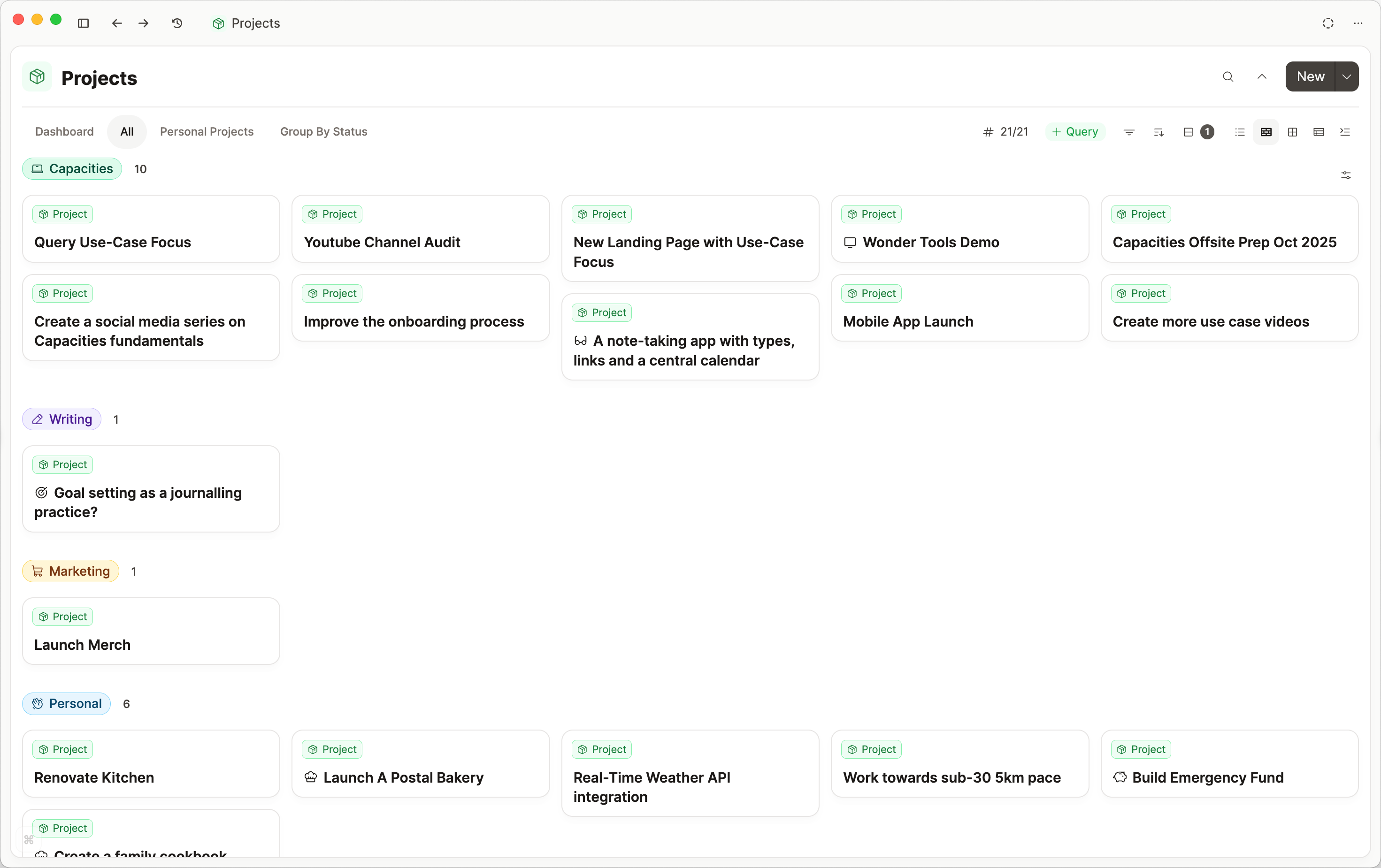
- Choose the property for your groups (these become Kanban columns).
- Click the view icon next to it and choose Kanban if you want a board.
A menu will display all available properties for that object type. Groups are automatically created for each distinct property value.
Grouping by Date Properties
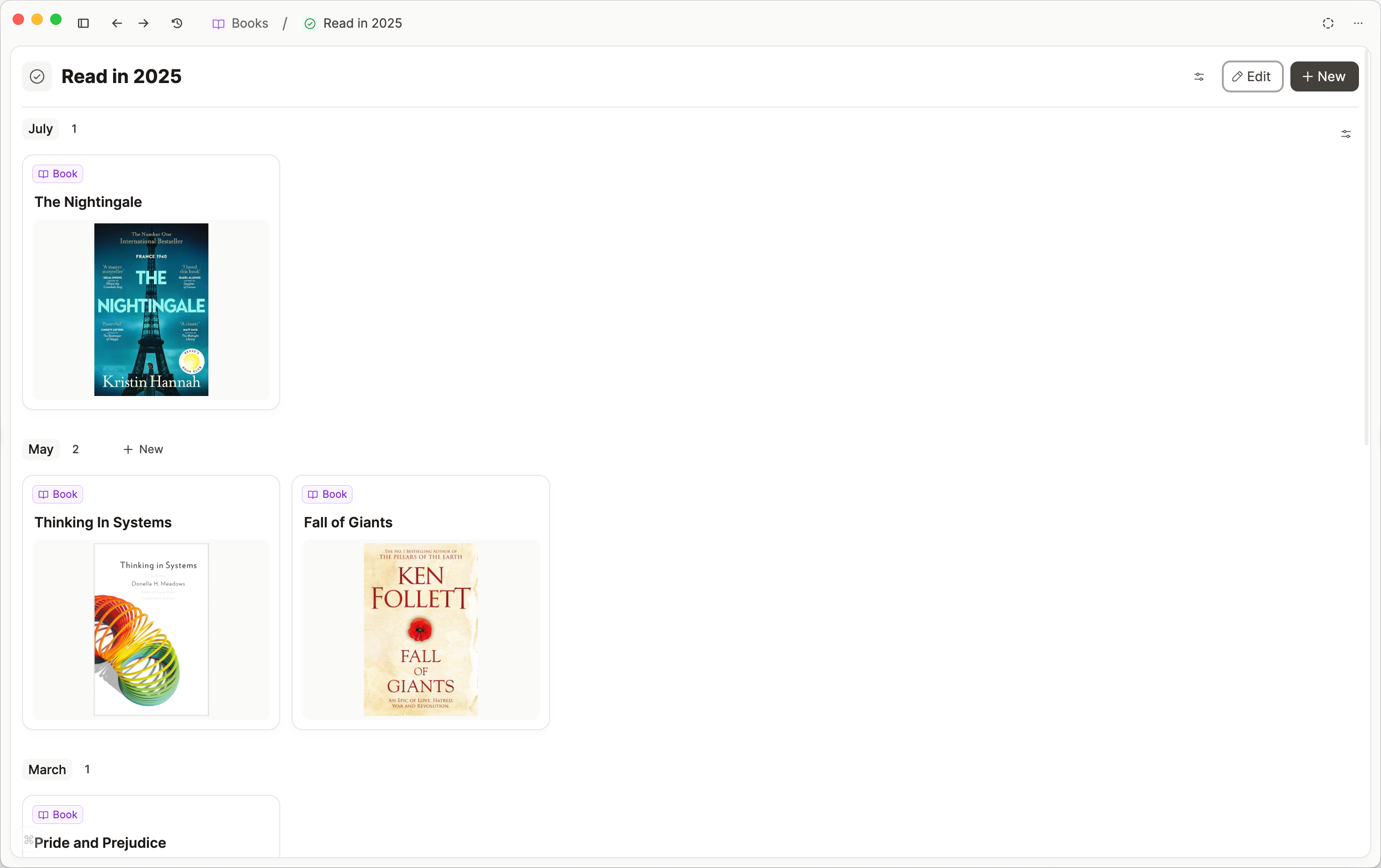
When grouping by a date property, an additional granularity setting is available. You can group by exact date, or group into week, month, years or relative options.
For example, group books by their Date Finished property, displayed by month.
Grouping by Number Properties
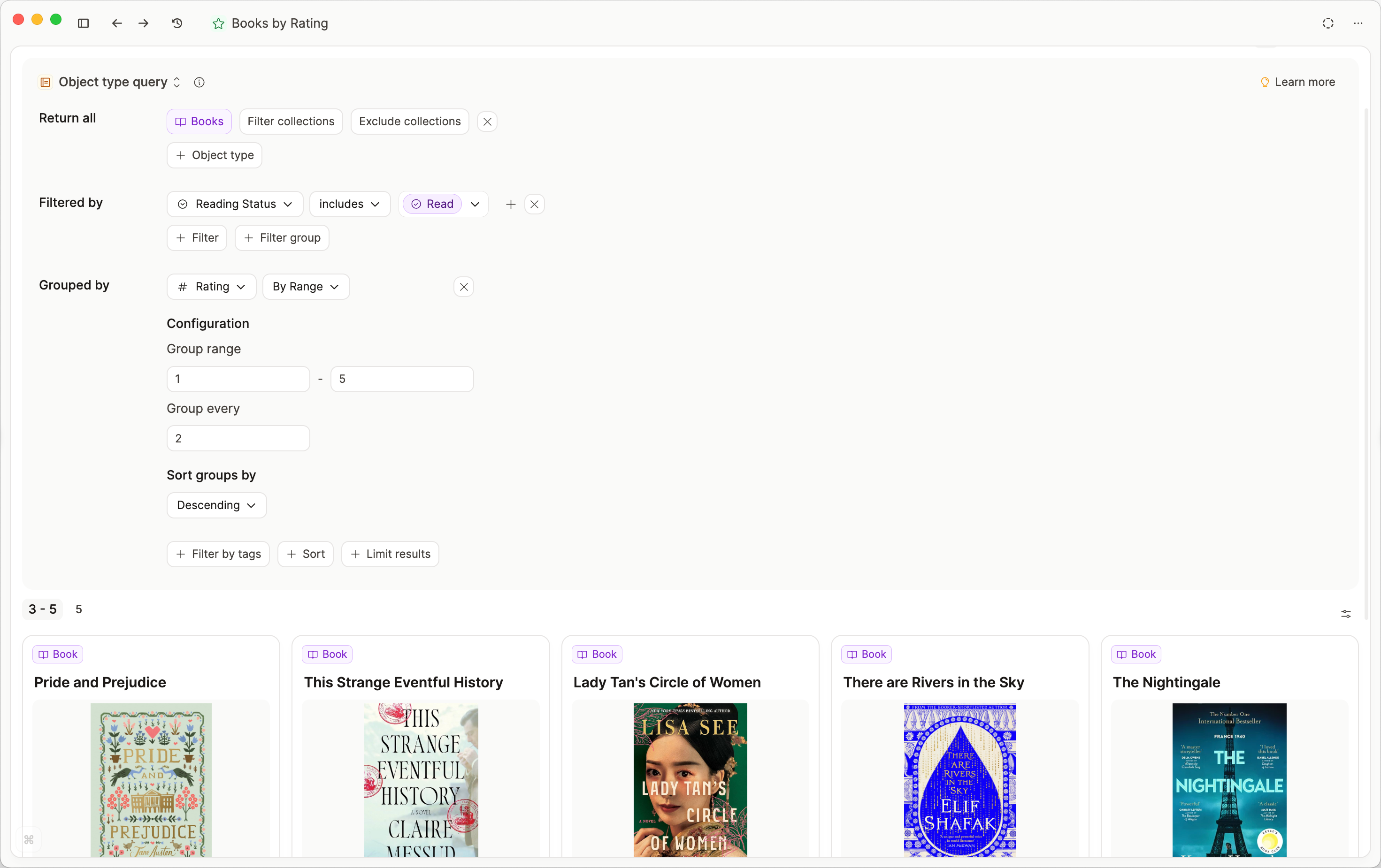
Group numbers by exact value or by range.
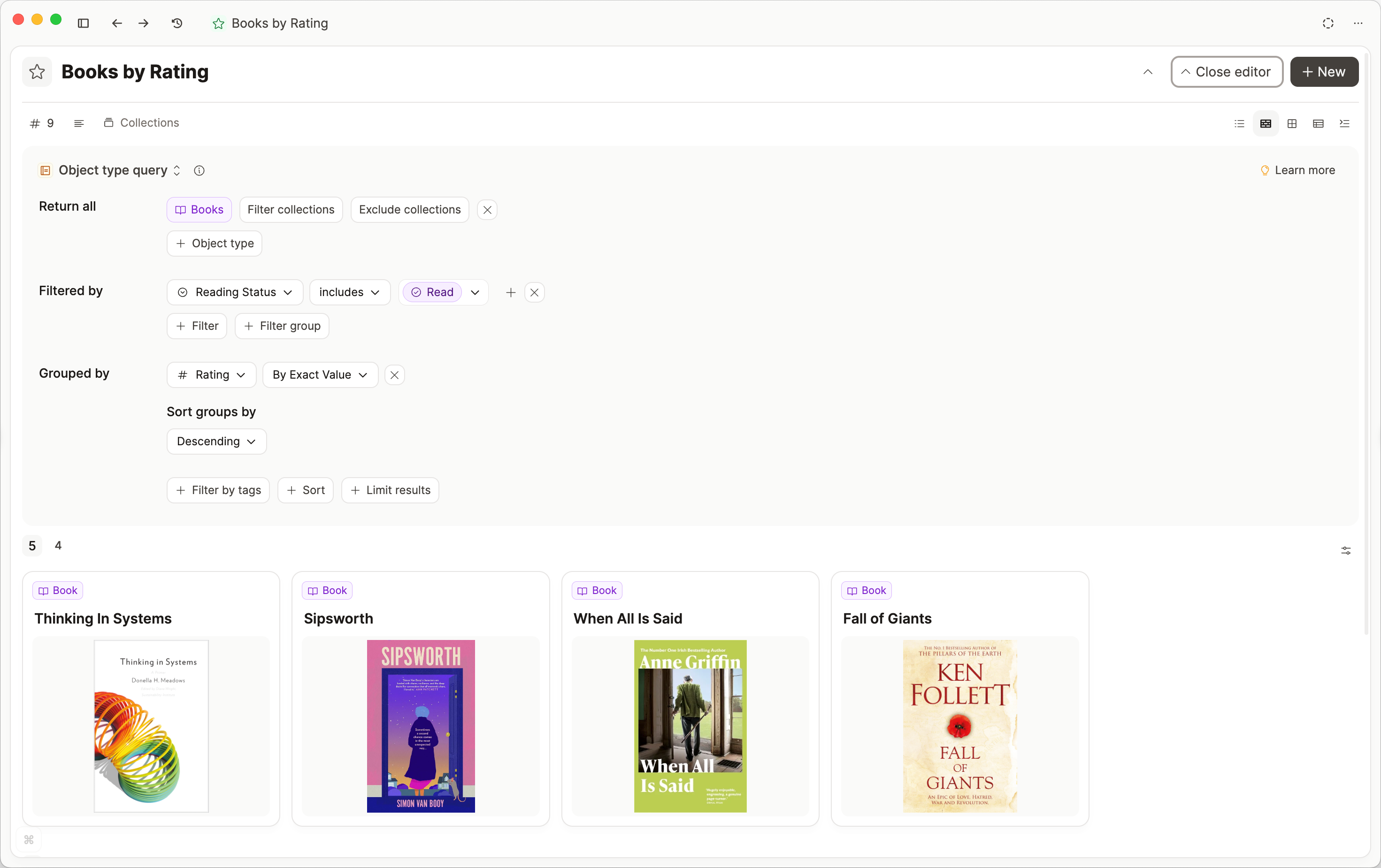
You will see where to set this up when you choose to group by a number property.
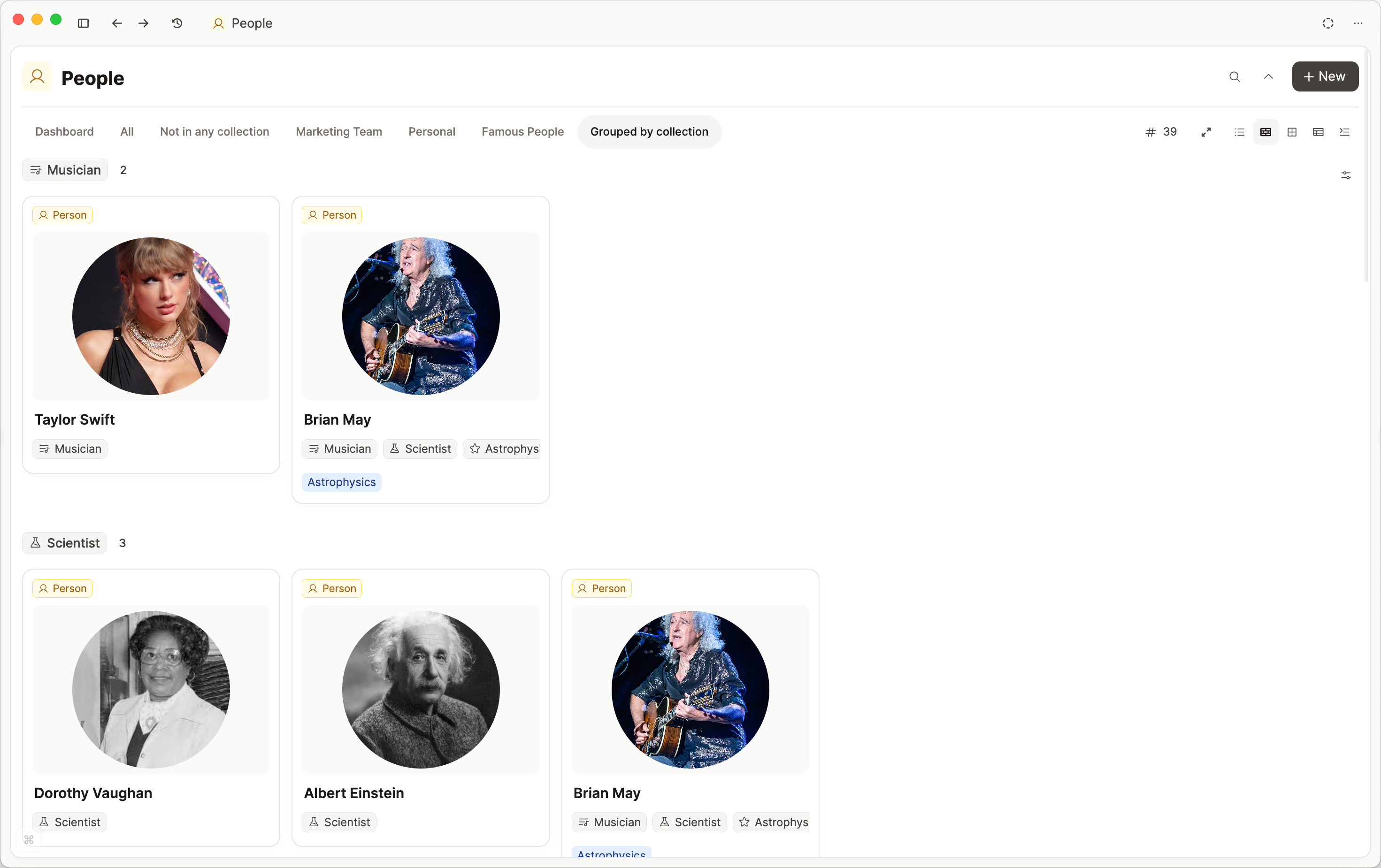
Group by Collections
You can group by collections too.
Arranging the groups
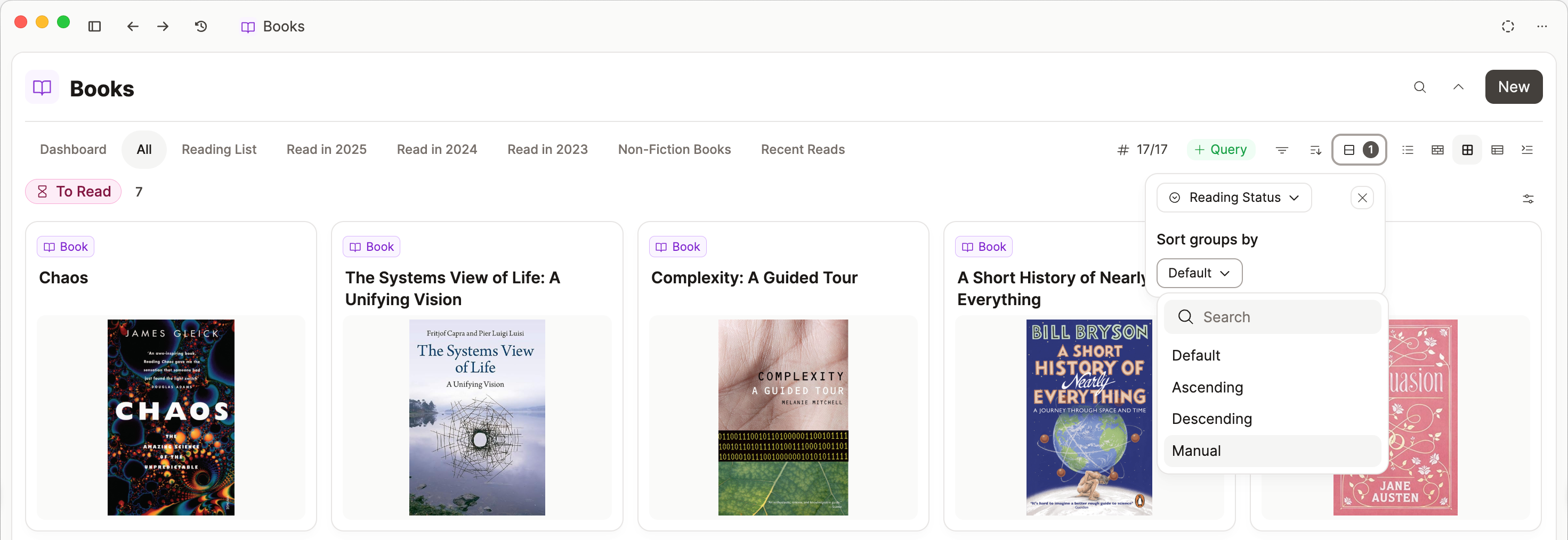
You can choose to sort groups in ascending, descending, manual order, or by size.
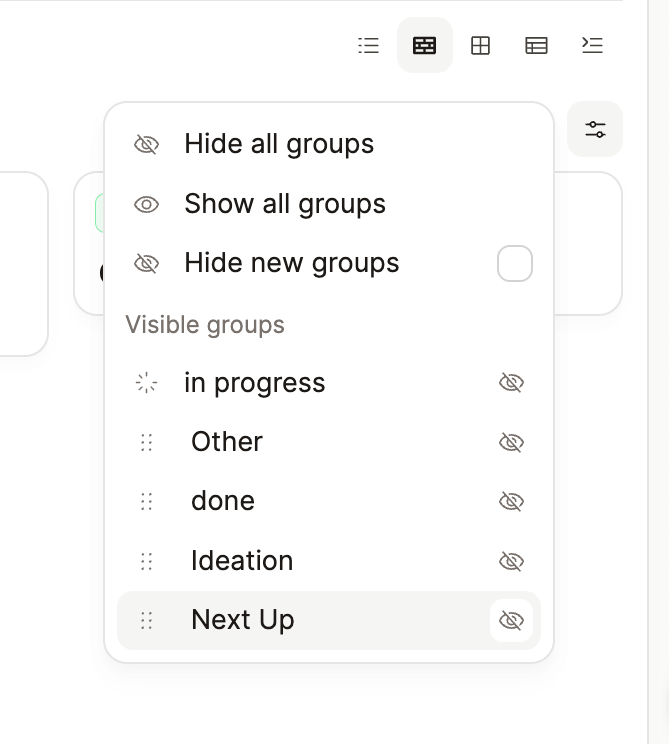
Click Customize view (the sliders icon) on the right, then Groups, to hide or show groups. Calculations is in the same menu, for a list, gallery, wall, table, kanban, or embed. See Calculations.
Here you can drag and drop the order of groups if the sort order is set to 'Manual'.
In a table view, empty groups include New object, so you can add a row without leaving the group.
Group by in Queries
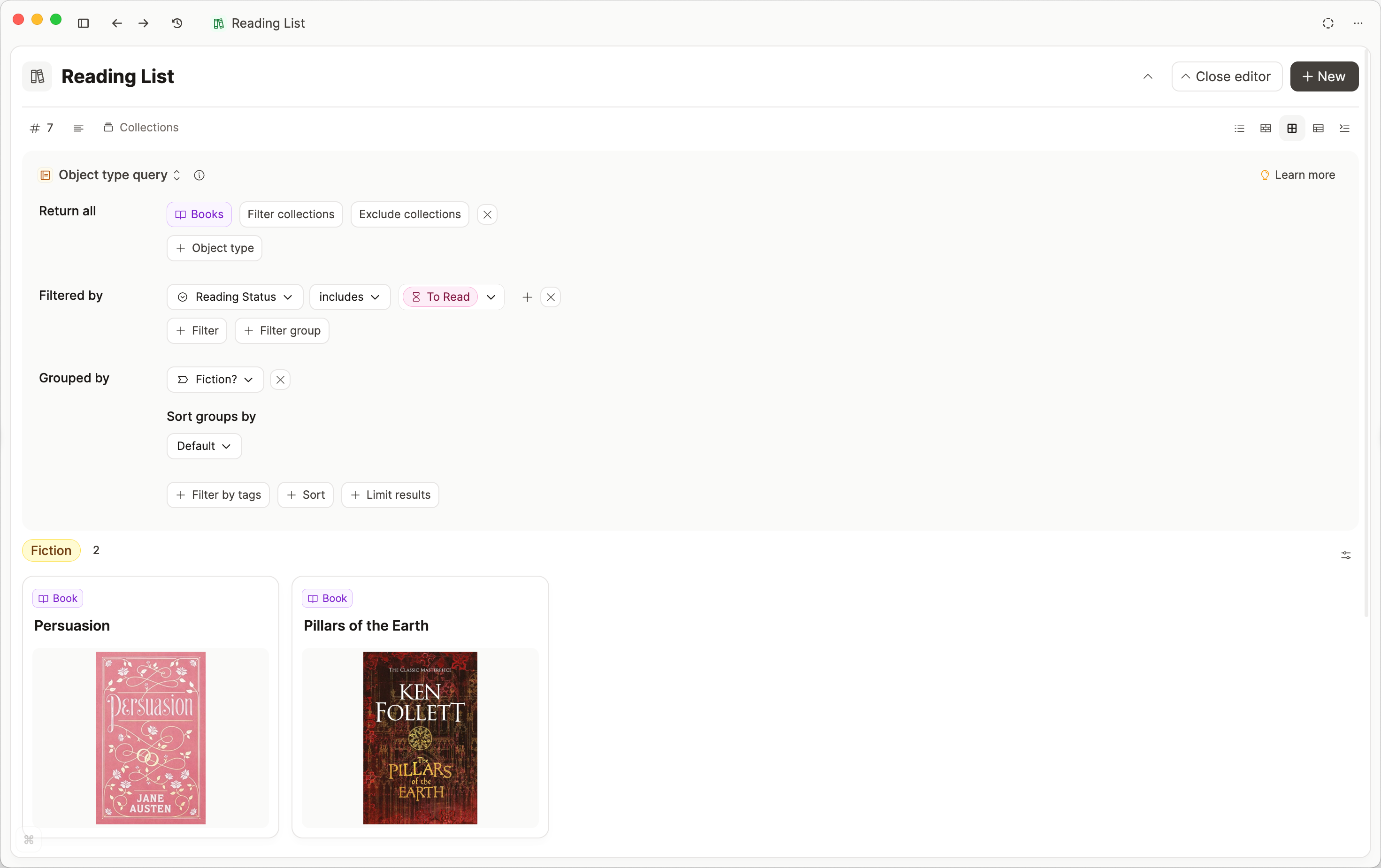
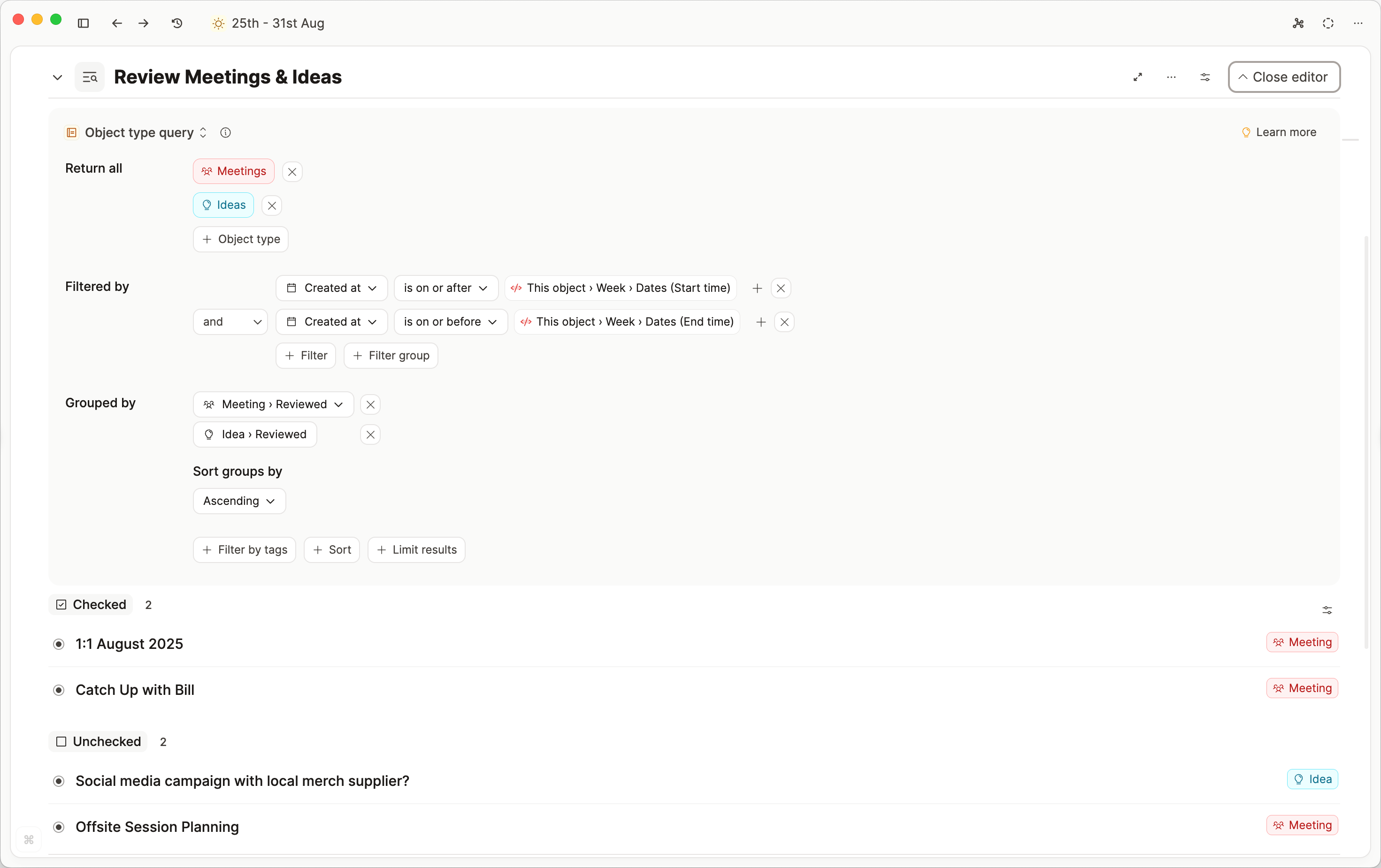
Click 'Group by' in the query editor to define your groups.
Queries can be grouped by any property of the returned objects.
For example, a reading list query filtered to “to read” books can be grouped by “Fiction/Non-fiction.”
Group by similar properties
If multiple object types in a query share a property with the same type (e.g., a checkbox), groups can be merged.
For example: a query returning meetings and ideas with a shared “Reviewed” checkbox groups both into “Reviewed” and “Not reviewed.
FAQs
- How can I re-arrange the groups?
Choose Manual in the sort options, then open Customize view (the sliders icon) and choose Groups. Drag the groups by the six dots beside the group name.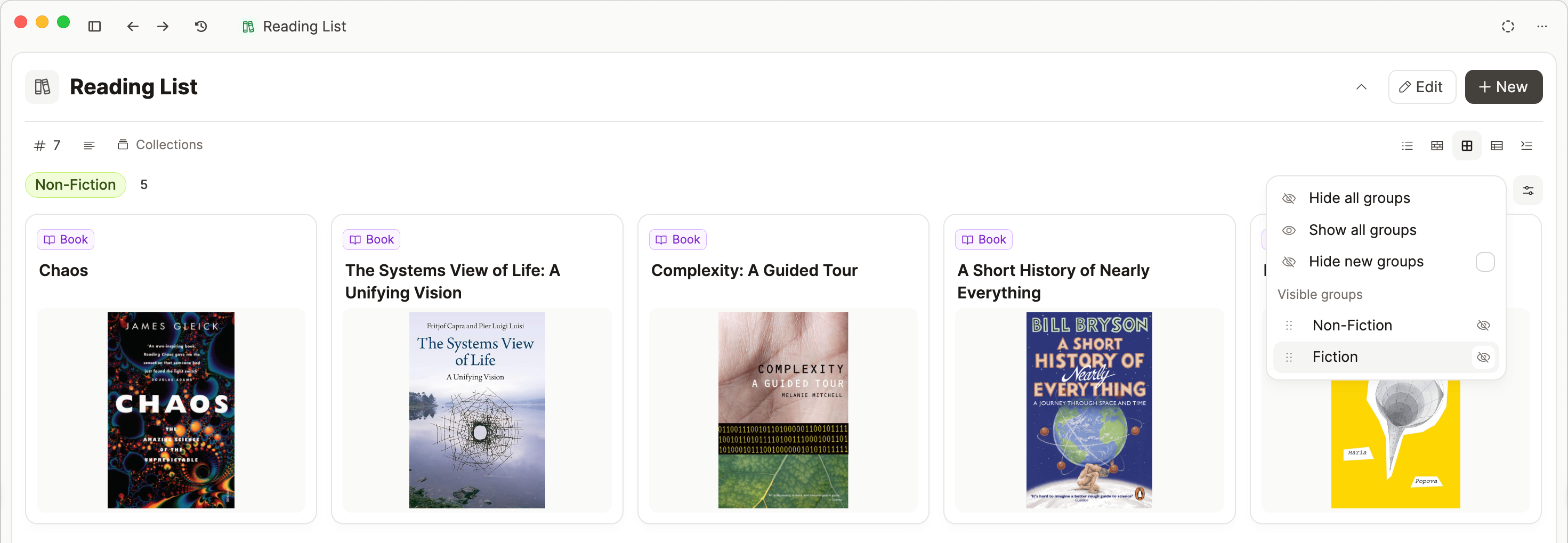
- Where is the kanban view?
Group your content first (see Set Up & Kanbans), then open the view menu next to the group control and choose Kanban. For step-by-step instructions, see How do I make a Kanban board?. - Can I use group by with blocks?
No, blocks do not have properties like object types do, and groups are defined by properties. - I can't find the grouping option I want
Groups are always based on properties of the current objects in view, so you might need to create a new property. If you cannot find the configuration you want after checking the properties, please create a feedback ticket. - How can I save a grouping?
Choose Save as query. Queries are a paid feature. - My Kanban only has one column
Group your items first and then choose the Kanban view. - How do I show or hide groups in Kanban?
Click Customize view (the sliders icon), then Groups. - How do I rearrange the order of my groups in Kanban view?
Click Customize view (the sliders icon), then Groups. Click the six dots to the left of each group name and drag it. - How can I add a new item to the group?
Hover next to the group name and click 'New', or scroll to the bottom of the group and click 'New'. In a table view, empty groups also show New object.
Ask a question! - The Docs Assistant knows everything about the documentation, and the ideas and feature requests from other users.
Create a ticket on our feedback board. - Let us know if you have an idea for a feature, improvement or think there is something missing.
Request additions to the documentation. - If your questions are not getting answered, let us know and we will extend the documentation.